

By Sophie Lancaster
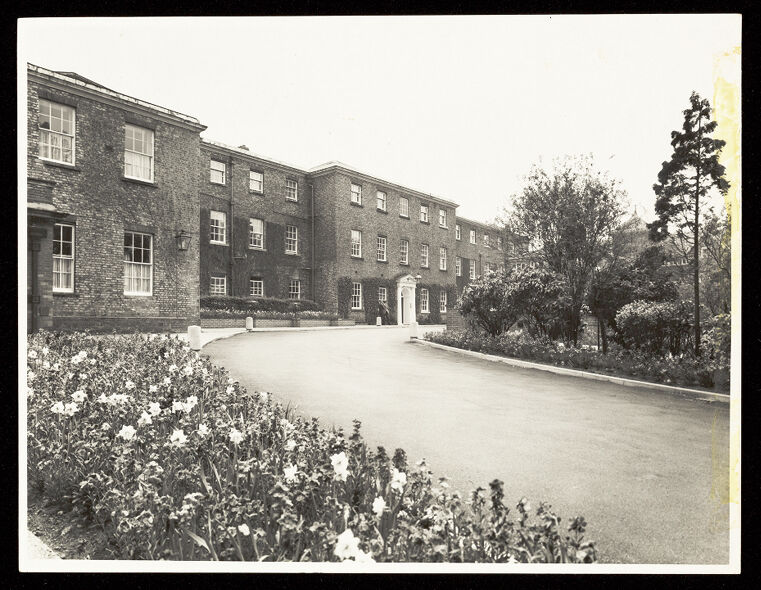
You might have noticed that The Retreat, the Grade II listed building on Heslington Road, is being transformed into 120 new heritage homes. So, this month, we’re taking a look back at its fascinating history.
The Retreat was one of the most influential mental health institutions in the world, founded by William Tuke and fellow members of the Quaker movement, also known as the Society of Friends.
William Tuke had seen first-hand the dire conditions inside York Lunatic Asylum, later Bootham Park Hospital. He knew a Quaker from Leeds, Hannah Mills, who had been admitted to the asylum with ‘melancholy’ after her husband sadly died in the March of 1790. By the end of April, six weeks after she arrived, Hannah died in the asylum due to maltreatment.
The patients at York Lunatic Asylum were treated like animals – they were beaten and underfed, confined to small spaces and neglected. Unfortunately, this was a widely accepted practice in asylums during this time.
There is a 1786 quote from Joseph Townsend, a doctor, which demonstrates the beliefs these institutions held: “Hunger will tame the fiercest animals, it will teach decency and civility, obedience and subjection to the most perverse.”
William had no knowledge of mental health, but he wanted patients to be cared for and treated equally, regardless of their social class. Based on the Quaker principles of self-control, compassion and respect, he wanted patients to be given nutritious food, a place to exercise, and companionship.
William believed that nature and the outdoors played a big part in healing, which explains the extensive grounds built at The Retreat. It has a beautiful landscape; there was pastureland used for cows, and gardens for the patients to walk through, as well as sports grounds for tennis, hockey, croquet, bowling and cricket.
The Retreat was designed to be a calming and relaxing place, not just outside but inside too. The building was airy and spacious, with huge windows and views onto the grounds.
The Retreat was founded in 1792 and opened in 1796. During the 18th century, there were hardly any purpose-built mental health asylums to base the designs for The Retreat on. William Tuke and his architect went down to London and visited St Luke’s Hospital – although the treatment of patients there was also very cruel, they were inspired by the layout of the building and the architectural design.
The architect they used was called John Bevans, also a Quaker, who practised in architecture and carpentry. John Bevans had built an asylum before, but The Retreat was designed to look welcoming and homely rather than institutional.
The Retreat was built using funds raised by William Tuke, his son Henry, and Lindley Murray, who was also a Quaker in York. The Retreat was a voluntary hospital, which means that the money needed for the costs and running of the estate came from payments and subscriptions made by Yorkshire Quakers and other Quaker groups. Those who subscribed were included in committee meetings, and were able to nominate poorer patients on the lowest admission costs, should they need it.
The hospital was originally just for Quaker patients, but was eventually open to everyone, although they would have had to pay a higher admission fee.
Patients would have their own private rooms, and they were encouraged to take part in daily chores and tasks. The Retreat was seen more as a community rather than a hospital or asylum, and the doctors were ‘attendants’ who lived alongside the patients. They ate meals with them and took part in doing the daily chores too.
The Retreat proved to be very effective, and patients often recovered and went home. As mentioned before, it was very influential for mental health, and the 19th century brought about a new discipline of psychiatry, which encouraged communication with patients, rather than trying to confine and subdue them.
A lot of its influence was down to William Tuke’s grandson, Samuel. Samuel wrote a book about the Retreat, called ‘Description of the Retreat of 1813’. He spent a lot of time reading as much as he could about the insanity in these asylums, and even went to visit St Luke’s Hospital to talk about the ‘humane system’. After it was published, it helped to expose the inhumane conditions of York Lunatic Asylum. It didn’t close, but it was reformed in 1814, after a suspicious fire that destroyed some of their records and killed four patients. It was never proved, but it was suspected to have been started to get rid of evidence of corruption.
The Retreat evolved into a more conventional medical facility and inspired other places, for example St Mary’s of Bethlehem, a psychiatric hospital in London, known as Bethlem Royal Hospital. Their superintendent visited The Retreat and said: “the best thing we have seen is something which we cannot take away with us to copy, and that is the atmosphere of your hospital”. The hospital underwent reforms, and they adopted a much more humane approach to patient care.
Samuel’s son, Daniel Hack Tuke, carried on the family legacy by training to be a doctor and working at The Retreat.
Another Quaker family involved with The Retreat was the Rowntree family. Joseph Rowntree was a member of the committee for 42 years, from 1863 to 1905. Members of the Rowntree family are actually buried in The Retreat’s burial ground.
The Retreat closed in 2018 after more than 200 years, as modern care shifted from institutional facilities towards community-based support. The new development will retain many original features and honour The Retreat’s significant contribution to mental health treatment.

Add a comment