

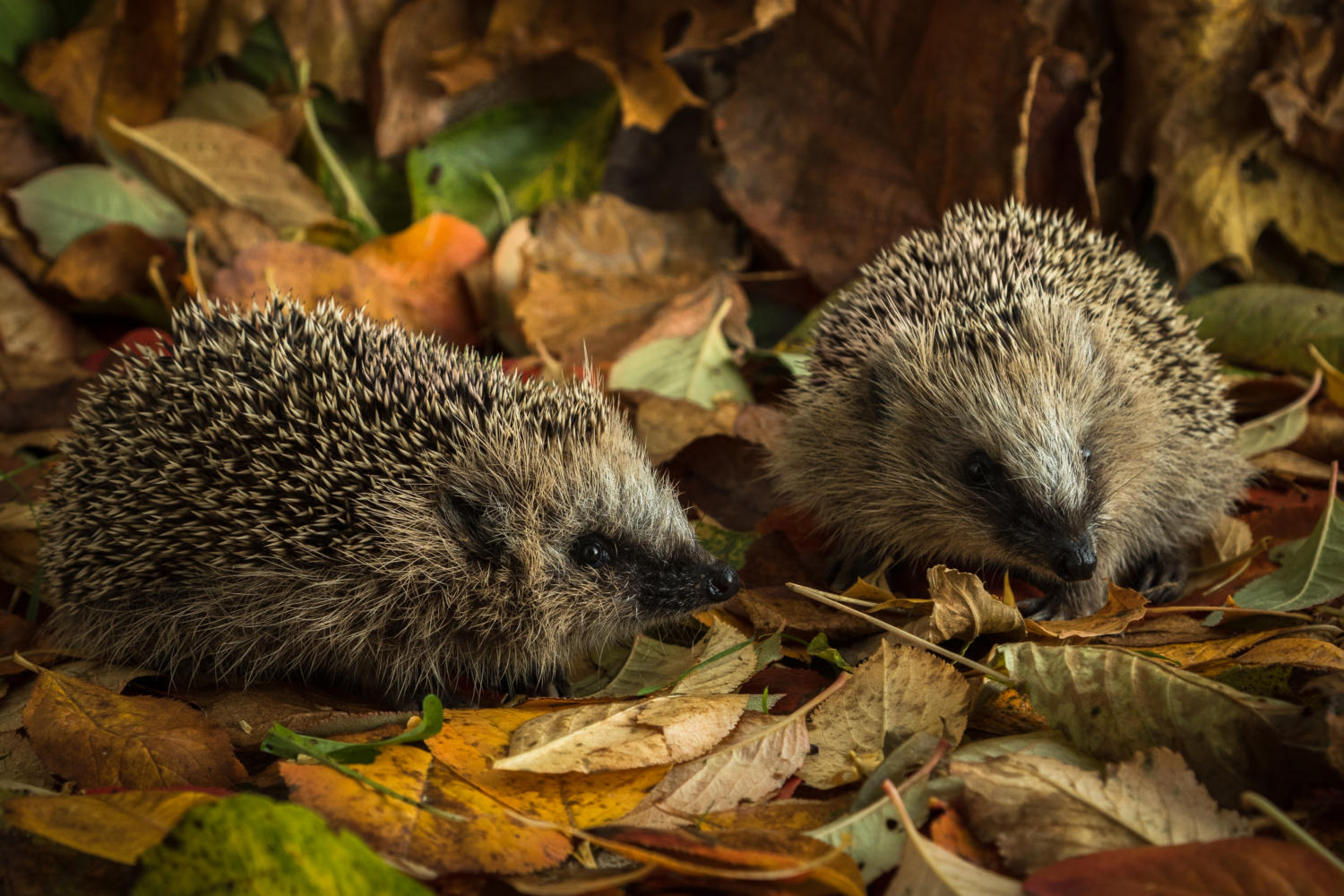
The beloved European hedgehog (Erinaceus europaeus) is regularly rated as the UK’s favourite animal, but with numbers steadily declining in recent years, their appearances in home gardens have become increasingly rare. If you’re lucky enough to have hedgehogs (fondly known by Yorkshire folk as ‘prickly-pigs’) living in or around your domestic green space, there are some simple steps you can take to keep these at-risk animals as safe, comfortable and protected as possible. As we move into autumn, what can gardeners in God’s Own County do to make life easier for the humble hedgehog?
Create a feeding station – If you’ve been gardening for wildlife over the summer, your green space should already be full of insects and creepy crawlies, which hedgehogs naturally love to munch on! To make life easier for your prickly pals as we move into autumn, create a feeding station (a small plastic or wooden box with a hole cut out should suffice) and remember to provide plenty of food. Avoid milk, bread, and peanuts – hedgehogs love to eat meaty cat or dog food! Replenish your feeding station at dusk to avoid attracting flies and animals that roam during the day.
Leave fallen leaves undisturbed – While it may be tempting to tidy up the autumn leaf fall in your garden, try to leave leaves undisturbed. Rather than removing them or chucking them on a bonfire, rake leaves into piles and try to keep them in a sheltered place, away from rain – these leaf piles will make a cosy, welcoming nest for local hedgehogs!
Take care when strimming – If you can’t resist a strimming session to keep wildflowers and long grass tidy and in check over the autumn, you MUST ensure that there aren’t any hedgehogs hiding before you start cutting. Try to clear overgrown areas by hand, rather than using machinery – if using an electric strimmer or mower, thoroughly check each area for hidden hogs before you begin.
Look out for signs of sickness – Behavioural changes in garden hedgehogs can be a reliable indication of illness, so keep an eye on your prickly pals. Look out for them moving unsteadily, wobbling, staggering, or venturing out of their nests (or even sunbathing) during the day; going off their food, being covered in flies or ticks, and excreting green, slimy, or bloody stools is also a sign of concern. Remember that autumn juveniles (that is, young hogs that are old enough to wander independently, but too young for solo hibernation) may be present in your garden – keep an extra eye on these juveniles, and if one displays signs of sickness, don’t hesitate to contact a rescue service.
Visit www.britishhedgehogs.org.uk or www.rspca.org.uk/adviceandwelfare/wildlife/hedgehogs to learn more about caring for hedgehogs. Contact the British Hedgehog Preservation Society helpline on 01584 890 801 for immediate advice regarding hedgehog health and rescue.









Add a comment