

By Sophie
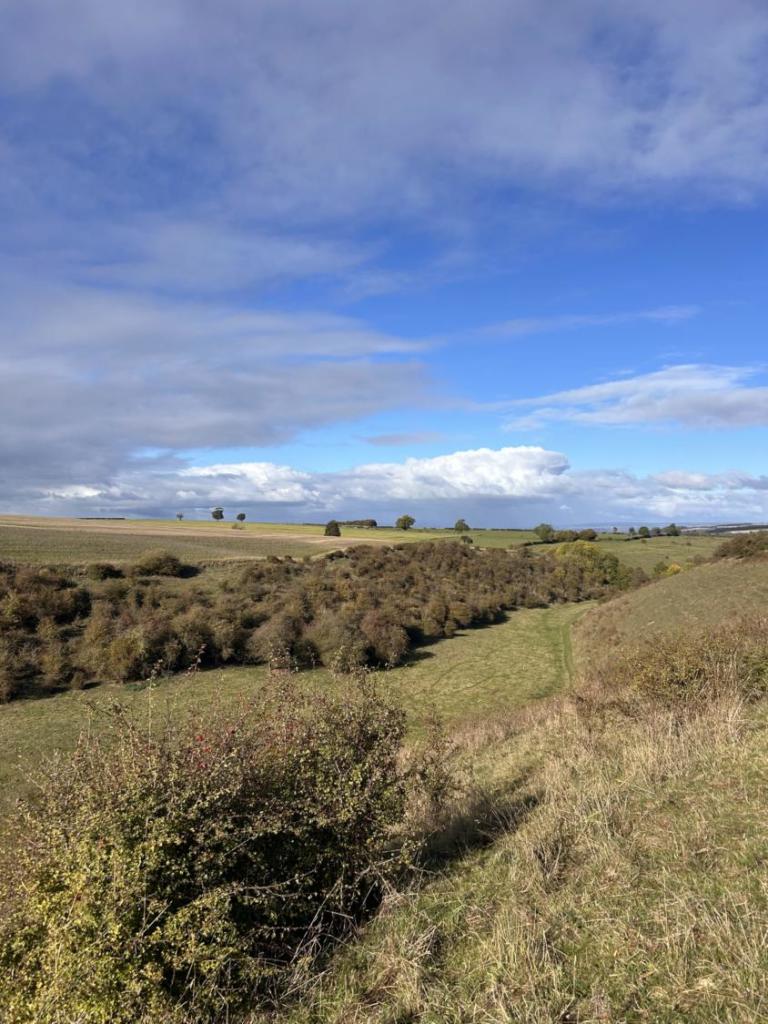
If you’re someone who enjoys a weekend walk in the countryside, there’s a great circular route in the Yorkshire Wolds that takes you back in time through the deserted medieval village of Wharram Percy.
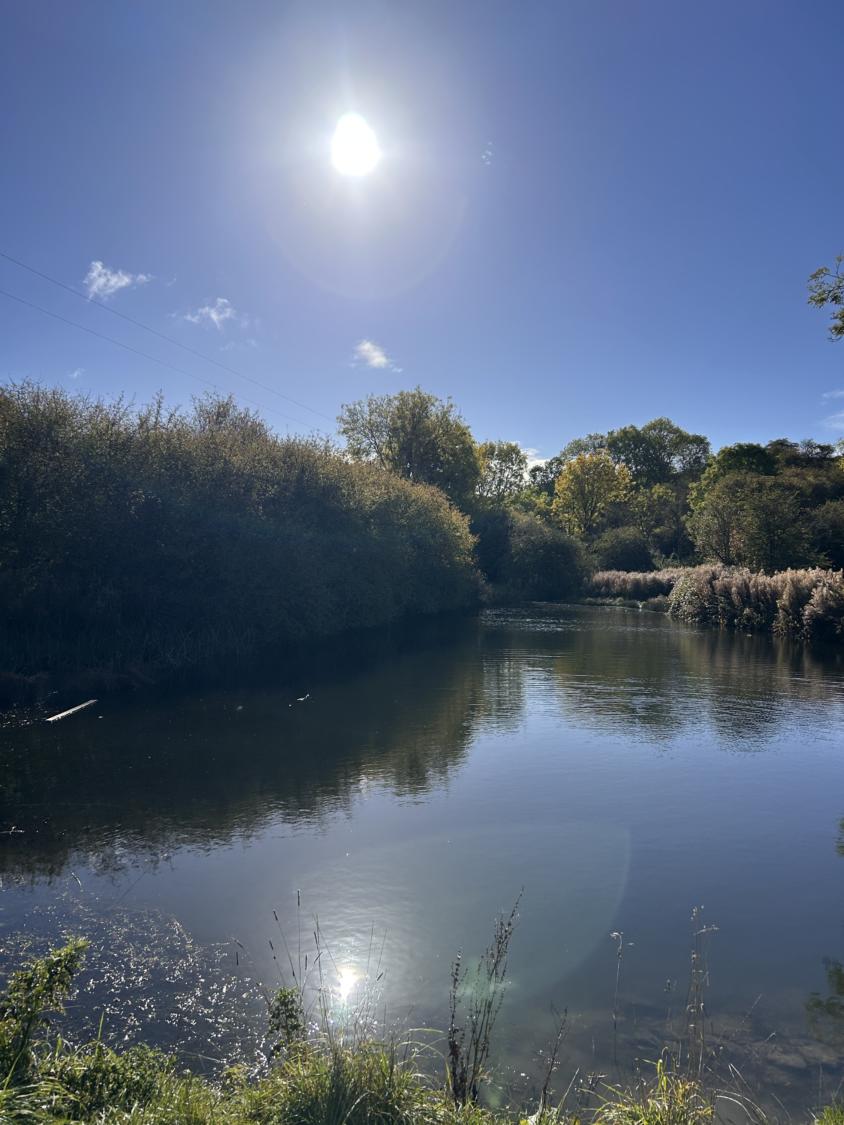
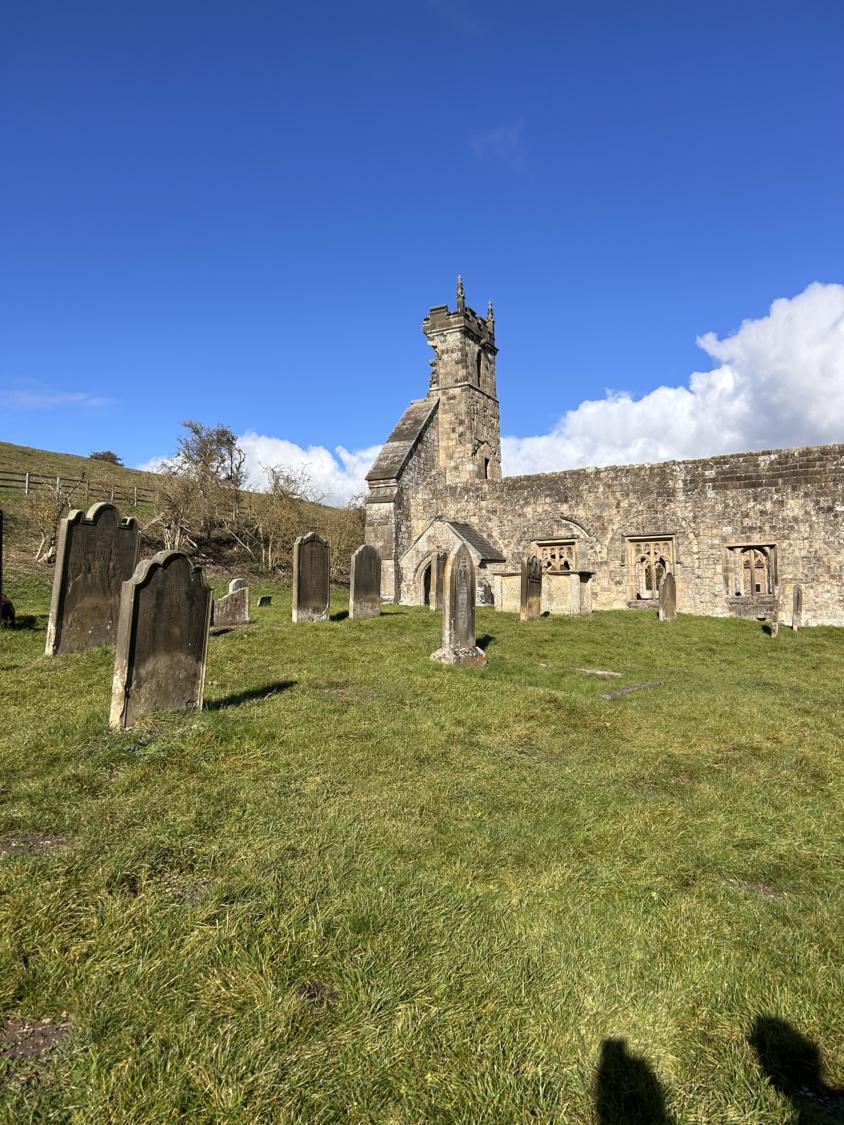
It is one of the most famous and largest preserved medieval villages in Britain, and you can find it hidden away in one of the Yorkshire Wolds’ valleys. Today, you can still see the foundations of the long-forgotten houses, as well as the remains of the church and millpond.
Interested? I was too, so let’s take a step back in time and discover the story of Wharram Percy…
The village was deserted around 1500, but had been previously occupied for 600 years. Before the village was established, however, it is thought that the first settlement was there from as early as 50 BC, during the Iron Age!
A small settlement was once on the land there, beside a track running from east to west across the valley. The settlement became a farmstead, where people would have lived and worked on the land, although this was abandoned during the 5th century, around the end of Roman rule.
The original village was established around the 9th or 10th century, although artefacts found suggest there was also a Saxon settlement there during the mid-7th century.
The settlement may have become more permanent during the 800s and 900s, when the first wooden church is thought to have been built. Records in The Domesday Book show that there were two main landowners, called Lagmann and Carli. Their names point towards Viking ancestry.
The village really thrived during the 12th and 14th centuries, when the Percy family lived and owned much of the land. Lagmann and Carli owned the land first, but by 1086, William the Conqueror had confiscated it and given the land to William de Percy, a Norman baron. William de Percy was the ancestor of the future Earls and Dukes of Northumberland, who lived at places like Warkworth and Alnwick castles. The Percy family already owned land in Bolton Percy, and by 1176, William was the main landowner in Wharram. There was another landowner, Henry Chamberlain, but he sold his share to Peter Percy in 1254. It was then that the name of the village could have become Wharram Percy.
If you visit the village, you can see the foundations of two manor houses and around 40 peasant houses and buildings. It was around the time the Percys took full ownership that the second of the manor houses was built, along with more houses, and the population of the village was around 200.
During the 14th Century, the village became quite unsettled by the Scottish raids, with villages nearby, like Thixendale, being burnt down. Peter Percy II died young, and by 1323, around two-thirds of the land was uncultivated, the mills were unused, and some houses were deserted.
Was this the beginning of the end for Wharram Percy?
Peter II’s eldest daughter, Eustachia, was too young to inherit and so she was made a royal ward, which meant the Crown could control the land until she was old enough. She later married a man called Walter Heserlton from the nearby village, but sadly he died from the plague in 1349. The population of the village dropped from around 67 to 45 during the plague.
Walter and Eustachia’s son, named Walter, was also too young to inherit the estate, and the Crown took control again. After Walter died in 1367, the estate went to his distant Percy relative, Henry Percy of Spofforth. However, the new Percys never lived at the village, and the manor house fell into disrepair. More positively, the uncultivated land was being worked on again, one of the mills was back in use, the millponds generated trade from fishing, and more people had moved into Wharram Percy. It was around 1400 when the Percy family exchanged the village for a manor house owned by Baron William Hilton.
The village carried on well as it was until the late 1450s, when many of the occupants moved away. This was because, during the Middle Ages, wool prices were rising and many landowners switched from arable farming to using the land as pasture for their sheep. This meant that hardly any workers were needed, and families were even evicted from the village.
The village was then bought and passed to several owners throughout the centuries, until the 6th Baron Middleton bought the estate in 1833, whose successor still owns the site today.
The village has quite a gruesome history alongside all of this. An archaeological study of the human remains found in Wharram Percy discovered that many of the remains had been decapitated, dismembered, burned and even smashed into pieces. It was thought that perhaps these people had been outsiders or intruders to the village, and that was why they had been treated in such a way. But, they later discovered that these remains were most likely of people who had actually lived in the village. This led to the theory that, during famine, the villagers may have turned to cannibalism. But this was also discounted, since the knife markings on the bones were around the neck and head, and not the muscles.
The archaeologists concluded that the villagers were actually trying to stop the bodies from coming back to life! In medieval times, there was a huge fear of ‘revenants’, people who had come back from the dead and threatened the living. It is believed that the villagers of Wharram Percy dismembered their dead to prevent them from rising again.

Today, Wharram Percy is a far cry from the bustling medieval village it once was, but if you fancy a peaceful winter stroll through the Yorkshire Wolds, why not discover its fascinating history for yourself?
Scan the QR code to explore the walking route.



Add a comment